Which Are the Best Crypto Debit Cards? (2026 Guide)
Crypto debit cards let you spend your crypto (or stablecoins) in everyday life while the card network (Visa/Mastercard) settles the payment in fiat behind the scenes. The “best” card isn’t only about the biggest cashback headline: it’s about real-world fees (FX, conversion, ATM), availability in your region, supported assets, and how cleanly you can track transactions for taxes.
In this guide you’ll get a practical, comparison-first answer to “Which are the best crypto debit cards?” with clear rules for choosing the right one—especially if you want a card connected to a large crypto platform.
Quick answer: the best crypto debit cards right now
If you want a mainstream, exchange-connected crypto card experience, these are strong starting points:
- Best all-round “everyday spend” option: BYBIT (strong card ecosystem and broad card-fee documentation, good for users who value clarity).
- Best Web3-style spending + app-based card experience: BITGET (particularly if you’re interested in wallet-centric payments and fast in-app onboarding).
- Best “alternate route” via a virtual card product: MEXC (useful if a virtual card fits your needs and it’s available in your country).
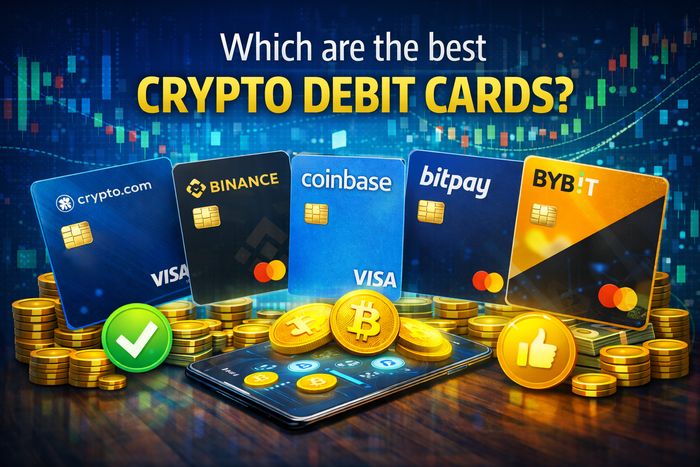
For completeness, other widely discussed crypto cards include options from major global platforms (e.g., Coinbase, Crypto.com, Binance) and several fintech-style crypto cards. Which one is “best” depends on where you live and how you plan to fund and spend.

At-a-glance comparison table
Use this table to shortlist candidates, then read the “How to choose” section to avoid common traps like FX markups and conversion fees. (Availability and terms can change by region and issuer, so always verify inside the card application flow.)
| Card | Best for | Typical strengths | Watch-outs |
|---|---|---|---|
| Bybit Card | Everyday spending + clear fee structure | Rewards/cashback promos, detailed fee/limit pages, card controls | FX & conversion fees vary by region; always review limits |
| Bitget Wallet Card | Web3 wallet-based spending + in-app onboarding | Mobile payment support, multi-region availability (issuer-dependent), fee/refund concepts | Terms differ by issuing partner; confirm local fee quota and limits |
| MEXC Virtual Mastercard (where available) | Online spending + virtual card workflow | Virtual card application path, suitable for users who prefer online payments | Country eligibility and verification steps are key; confirm supported regions |
| Coinbase Card | Mainstream card option in supported regions | Rewards structure (region-dependent), broad brand familiarity | Fees and availability vary; check local terms |
| Crypto.com Visa Card | Perk-heavy tiers | Tiered rewards and perks (depending on program) | Tier requirements can be high; read the fine print |
| Binance Card (where available) | Ecosystem spenders | Often marketed with strong cashback tiers | Availability can change by region/regulation |
Internal reads you might like: crypto debit card · stablecoin · crypto tax · travel fees
Top picks (Why we like them)
1) Bybit Card – strong “daily spending” profile if available in your region
The Bybit Card often appeals to users who want a relatively straightforward, card-first experience with clear disclosures about fees and limits. It’s especially useful if you travel or spend across currencies and want to understand how FX and crypto conversion are handled before you swipe.
- Good fit for: everyday spending, budgeted stablecoin spend, users who want transparent fee documentation.
- What to look for inside the app: local denomination, FX fee, crypto conversion fee, ATM terms, virtual vs physical availability.
- Rule of thumb: if you spend internationally, prioritize low FX fees and predictable conversion logic over headline cashback.
2) Bitget Wallet Card – wallet-centric card experience and mobile payments
Bitget’s ecosystem is a little different because there’s a difference between “exchange cards” and “wallet cards.” For most everyday users, the wallet-style card product is the more relevant concept: quick onboarding, mobile-pay support, and a spend flow that’s designed around a wallet app experience.
- Good fit for: users who like app-first Web3 payments, stablecoin top-ups, and quick virtual card usage.
- What to verify: your eligible region, issuer partner terms, fee/refund quotas, and daily/monthly spending caps.
- Practical tip: if your card has a “0-fee quota” or fee-refund model, treat it like a monthly allowance—plan spending around it.

3) MEXC – consider a virtual card approach if it matches your needs
If your primary goal is online payments (subscriptions, digital purchases, app stores) and you’re comfortable with a virtual card setup, MEXC’s virtual-card pathway can be attractive where it’s supported. This can be a good solution for users who prefer not to rely on physical card delivery or who mainly spend online.
- Good fit for: online-first spending, users who want a virtual card workflow.
- What to verify: supported countries, KYC requirements, deposit/top-up steps, and any local restrictions.
- Rule of thumb: if you need in-store spending + ATM withdrawals, confirm those features explicitly before committing.
How to choose a crypto debit card (the checklist that saves you money)
Here’s a decision framework that works across any provider—exchange cards, wallet cards, or fintech cards. If you follow these steps, you’ll avoid the most common “I didn’t realize that fee existed” mistakes.
Step 1: Decide what you’ll actually spend
- Stablecoin-first spending: simplest for budgeting; fewer “price surprise” moments.
- Multi-asset spending (BTC/ETH/etc.): convenient, but you’ll want excellent tracking and clear conversion rules.
- Travel spending: FX fees become a deal-breaker—look for low FX costs and minimal rate markups.
Step 2: Check availability and limits before you get excited about rewards
- Country support: many cards are region-limited and can change quickly.
- Virtual vs physical: virtual cards are often fastest; physical cards help for in-store/ATM use.
- Spending & ATM limits: confirm daily/monthly caps (especially if you plan to use the card as a “main card”).
Step 3: Choose based on the fee profile that matches your life
- FX fee: what you pay when you spend in a different currency.
- Crypto conversion fee: what you pay when crypto is sold/converted to settle the transaction.
- Top-up fees: some cards charge to add funds; others don’t.
- ATM fees: often include card issuer fee + the ATM operator’s own fee.
Quick action
Want the fastest shortlist? Use the fee checklist below and eliminate any card that fails on FX or conversion costs.
Fees that matter most (and the “hidden costs” checklist)
Crypto debit cards can look similar until you read the fee tables. These are the fees that change your real cost per purchase:
1) FX fee and exchange-rate markup
If you spend in multiple currencies (travel, online stores, subscriptions), FX fees can quietly erase your cashback. Always check whether the provider applies a % fee on top of the network rate (Visa/Mastercard) and whether there’s any “padding.”
2) Crypto conversion fee
Some cards charge a conversion fee when your crypto is sold to fund the purchase. This is often the biggest variable cost, especially if you spend frequently. If a card advertises high rewards, compare it against the conversion fee and the effective rate.
3) ATM fees and “free withdrawal thresholds”
Many cards offer a “free ATM amount” per month, then charge a percentage fee beyond that threshold. If you plan to use ATMs regularly, pick a card with generous free tiers or avoid ATM withdrawals altogether.
4) Inactivity, replacement, and chargeback handling
Most users ignore these until something goes wrong. Check replacement costs for physical cards, any inactivity fees, and whether you can instantly freeze/unfreeze the card.
Cashback & rewards: how to compare properly
Cashback should be the final filter, not the first. Here’s how to judge rewards like a pro:
- Look for caps: “Up to X%” is often capped monthly or limited to a promo period.
- Check reward currency: is it paid in points, a token, stablecoin, or “voucher credit”?
- Compare against fees: a 1% conversion fee can wipe out a 1% cashback headline instantly.
- Make it realistic: pick rewards you’ll actually earn without locking large balances or meeting complex tier rules.

Security & compliance essentials
A crypto debit card is a payments product, so treat it like a bank card: prioritize safety features over hype.
Must-have security features
- Instant freeze/unfreeze (in-app card lock)
- 3D Secure / strong customer authentication for online purchases
- Spending controls (online/in-store toggle, merchant category restrictions if available)
- Two-factor authentication and withdrawal protections
KYC and regional rules
Expect KYC (identity verification). Also remember that providers may adjust card availability due to local regulations or changes in card issuing partners. Always confirm eligibility inside the official application flow.
Tax & record-keeping (don’t skip this)
In many jurisdictions, spending crypto can be treated like a disposal/sale, which may create a taxable event (capital gains/losses). This is highly country-specific, but the best practice is universal:
- Use a consistent funding strategy (often stablecoins) for simpler bookkeeping.
- Keep transaction history exports (card transactions + conversions).
- Track cost basis if you spend volatile assets (BTC/ETH) regularly.
If you want deeper internal guidance, you can explore: capital gains crypto · portfolio tracking · stablecoin spending
Best setup for daily spending (stablecoin-first, low-stress)
If your goal is predictable daily spending, a stablecoin-first approach is usually the most practical:
- Pick one stablecoin you trust and that the card supports well.
- Top up on schedule (weekly/monthly) instead of constantly converting small amounts.
- Keep a buffer for subscriptions and recurring charges.
- Use the card like a budget envelope: “card balance = spending limit.”
This approach reduces the chance you accidentally spend volatile assets at the worst time and makes tax tracking easier.
FAQ: Best crypto debit cards
What is the best crypto debit card overall?
“Best” depends on your region and spending habits. A good overall choice is typically the one with (1) availability in your country, (2) low FX + low conversion costs, and (3) strong app security controls. Start by comparing fee tables, not cashback headlines.
Are crypto debit cards safe?
They can be, if you use strong account security (2FA), enable card controls, and freeze the card when not in use. Prefer providers with clear security features and transparent terms.
Do crypto debit cards trigger taxes?
Often yes, depending on your jurisdiction—spending crypto may be treated as a disposal/sale. Stablecoin-first funding can simplify record-keeping, but you should confirm local tax rules.
Which fees matter most?
FX fees and crypto conversion fees usually matter more than annual fees (which are often zero). ATM fees can also be significant if you withdraw cash frequently.
Should I choose a virtual or physical crypto card?
Virtual is usually fastest for online spending and digital wallets. Physical cards are better for in-store use and some ATMs. If you travel, check whether the physical card is available and what the ATM terms are.
How do I pick the best card for travel?
Prioritize low FX fees and minimal exchange-rate markup. Rewards matter less than predictable FX costs when you spend across currencies.