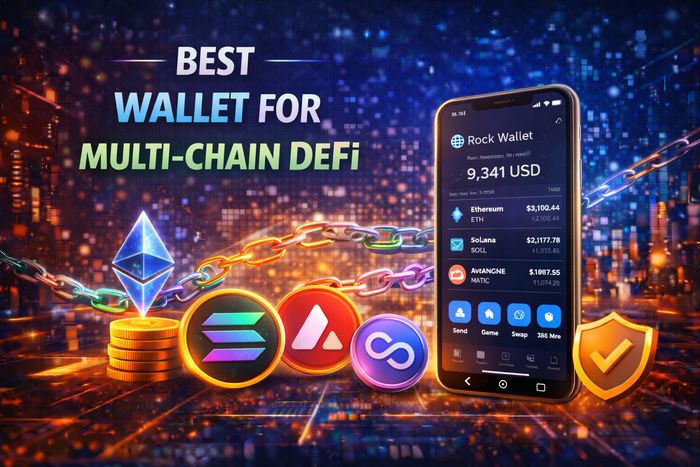
Best Wallet for Multi-Chain DeFi (2026): The Practical, Security-First Guide
If you’re searching for the best wallet for multi-chain DeFi, you’re probably trying to do one (or all) of these things: move assets across networks, swap on multiple DEXs, stake or lend, farm yields, mint or trade NFTs, and do it all without juggling five different apps. A true multi-chain DeFi wallet should make this feel simple—while still keeping you in control of your keys.
This guide breaks down what matters (security, chain coverage, swaps, bridges, dApp access, and fees), then highlights three strong options that work well for DeFi across multiple networks: BITGET, BYBIT, and MEXC.
Important: This is educational content, not financial advice. DeFi carries smart contract risk, bridge risk, and price volatility. Only use funds you can afford to lose and always verify token contracts and dApp URLs.
What “multi-chain DeFi wallet” actually means
A multi-chain DeFi wallet is a Web3 wallet that can manage assets and interact with decentralized applications across multiple blockchains—not just one. In practice, that means you can:
- Hold tokens from different networks (e.g., EVM chains, Solana ecosystems, and more) in one interface
- Connect to dApps (DEXs, lending markets, yield platforms, NFT marketplaces) without switching wallets constantly
- Perform cross-chain swaps or bridging with clear routing, slippage, and fee visibility
- Track positions (tokens, LPs, staking, airdrops) across chains with a unified portfolio view
The best options also reduce friction: built-in swap aggregators, dApp discovery, scam detection, token risk warnings, and guided bridging so you don’t accidentally send funds to the wrong network.
Quick picks: best wallets for multi-chain DeFi
Best Overall (All-in-One): BITGET Wallet
Great chain coverage, built-in DeFi tools, swaps, and a smooth multi-chain experience for beginners and power users.
Best for CEX + On-Chain Trading Flow: BYBIT Web3 Wallet
A strong “bridge” between exchange tools and DeFi, ideal if you frequently move between spot/perps and on-chain opportunities.
Best for Exchange-First Users Entering Web3: MEXC Wallet
Useful if you want a familiar exchange ecosystem while exploring multi-chain Web3 features like DeFi and NFTs.
How to choose the best wallet for multi-chain DeFi
Don’t pick a wallet based only on popularity. Multi-chain DeFi has real risk, and your wallet is your security perimeter. Here’s what to evaluate when choosing the best wallet for multi-chain DeFi:
1) Chain coverage that matches your strategy
If you only use a couple of networks, nearly any wallet will work. But if you actively farm across ecosystems, you’ll want broad support: major EVM chains, popular L2s, and non-EVM ecosystems depending on your needs. The best wallets make switching networks obvious and safe (no confusing RPC setups).
2) Cross-chain swaps and bridging clarity
Bridges and cross-chain routes are the biggest failure point for users. Look for: clear routing, slippage controls, visible fees, and warnings when a route is risky or unusually expensive. A good wallet will also show the receiving chain and token standard before you confirm.
3) DeFi and dApp usability
The best multi-chain wallets include dApp browsers, built-in discovery, and quick connection prompts. You should also be able to revoke approvals, view permissions, and manage multiple addresses easily.
4) Security options (non-negotiable)
Multi-chain DeFi wallets should support strong security patterns: seed phrase or modern key management (like MPC), passcode + biometrics, transaction simulation or warnings, and the ability to manage multiple wallets (hot wallet + vault wallet) in one app.
5) Fees and “hidden costs”
Many users focus on swap fees and forget: bridge fees, routing spreads, gas spikes, and approval costs. A wallet that helps you choose cheaper networks and shows total cost up-front can save a lot over time.
BITGET Wallet: best all-in-one multi-chain DeFi experience
If your goal is one app that can handle multi-chain asset management, DeFi discovery, swaps, and a streamlined interface, BITGET Wallet is a standout choice. It’s designed as a full Web3 hub—meaning you’re not only storing tokens, you’re also exploring dApps, accessing DeFi, and moving liquidity across networks without constant manual setup.
Why it works well for multi-chain DeFi
- Multi-chain support: practical coverage across many major ecosystems so you can diversify strategies
- Cross-chain swaps: built-in routing for swapping assets across chains with fewer steps
- DeFi-ready UX: dApp discovery, token tracking, and portfolio visibility help you manage positions
- Flexible security model: options that can fit both beginners and advanced users
Who should pick it
- Users who actively use multiple chains and want one wallet for daily DeFi
- Traders who move liquidity frequently and want easier cross-chain execution
- Builders and airdrop hunters who need broad access to dApps and networks
Suggested setup for safer DeFi
- Create two wallets: one for daily use (hot wallet) and one as a “vault” (long-term holding)
- Only fund your hot wallet with what you actually plan to deploy in DeFi this week
- Use separate addresses for high-risk farming vs. blue-chip DeFi positions
- Regularly review approvals and revoke anything you no longer use (see security checklist)

Strengths and trade-offs
No wallet is perfect. For multi-chain DeFi, the most important thing is that the wallet matches your habits. BITGET Wallet is strong for “one-stop Web3,” but you still need good operational discipline: don’t connect to random dApps, don’t sign blind approvals, and don’t keep large sums in a hot address.
BYBIT Web3 Wallet: best for CEX + on-chain trading in one flow
Many users don’t live purely on-chain. They trade on centralized exchanges and also want access to DeFi—new tokens, early liquidity, on-chain swaps, and trend cycles that happen faster than most CEX listings. That’s where BYBIT Web3 Wallet fits: it’s built to reduce the friction between “exchange mode” and “DeFi mode.”
Why it’s useful for multi-chain DeFi users
- Smoother transition into on-chain: especially if you already use a CEX for spot/perps
- On-chain trading focus: helpful for exploring tokens and DEX liquidity without juggling tools
- Practical for active traders: ideal if you frequently rebalance between CEX holdings and DeFi positions
Best-fit use cases
- “Hybrid” users: mostly CEX, but you deploy into DeFi when opportunities appear
- Users who want a guided, app-first experience for on-chain swaps and exploration
- People who want less setup friction compared to DIY RPC and manual bridging
Pro tip for safer usage
Treat any wallet connected to frequent trading as a spending wallet. If you’re interacting with many new tokens, new DEX pools, or experimental protocols, keep a strict cap on your hot wallet. Move profits back to a vault address and consider using a dedicated wallet for “high-risk exploration.”
MEXC Wallet: best for exchange-first users expanding into Web3
If your crypto journey is exchange-first, a wallet that feels familiar can be the difference between using DeFi confidently and abandoning it after one confusing bridge transaction. MEXC Wallet is appealing for users who want to explore Web3 features (including multi-chain assets and NFTs) while staying close to an exchange ecosystem they already understand.
Why it can be a solid multi-chain DeFi companion
- Multi-chain orientation: designed around managing assets across more than one network
- NFT + Web3 focus: useful if you’re combining DeFi activity with NFTs or on-chain communities
- Good learning curve: a smoother step for users transitioning from custodial exchange habits to Web3 workflows
Who should pick it
- Users who mainly trade on exchanges but want to start using DeFi in a structured way
- People who manage NFTs across chains and want a simpler hub experience
- Those who want to experiment with multi-chain activity without adopting a highly technical setup immediately
How to use it intelligently
If you’re new to DeFi, start with low-complexity actions: stablecoin swaps on major networks, small cross-chain transfers, and reputable protocols with large liquidity. As you gain confidence, you can expand into lending, liquid staking, LP positions, and more advanced strategies. (See the workflow section for a safe progression path.)
Security checklist for DeFi wallets
The fastest way to lose funds in DeFi is not “getting hacked”—it’s signing the wrong transaction, approving the wrong spender, or bridging through unsafe routes. Use this checklist to keep your multi-chain DeFi wallet safer:
Core wallet security
- Separate wallets: one hot wallet for daily DeFi, one vault wallet for long-term holdings
- Backups: store seed phrase/backup securely offline (never in cloud notes or screenshots)
- Device hygiene: keep OS updated, avoid unknown browser extensions, use biometric lock
- Address sanity: copy/paste carefully, verify first/last characters, use whitelists where possible
Transaction safety (most important)
- Never sign blind: read what you’re approving (spender address, token, amount)
- Limit approvals: avoid “unlimited” approvals unless necessary
- Revoke regularly: remove old permissions you no longer use
- Beware fake tokens: verify contract addresses before swapping or adding to watchlists
Bridge and cross-chain safety
- Avoid obscure bridges for large transfers—use widely used routes and split large moves into smaller ones
- Double-check destination network before sending (wrong network = lost funds in many cases)
- Watch total cost: bridge fee + gas + slippage + routing spread
Real multi-chain DeFi workflows (step-by-step)
Below are realistic workflows that map to how people actually use the best wallet for multi-chain DeFi. You can use these as a template—start simple and add complexity only when you’re comfortable.
Workflow A: Cross-chain swap (stablecoin to stablecoin)
- Choose your source chain (where your funds currently live)
- Select destination chain (where you want to deploy DeFi)
- Pick token in/out (e.g., stablecoin → stablecoin to minimize price risk during transfer)
- Set slippage conservatively (lower for stablecoins, higher only if liquidity is thin)
- Confirm network, fees, and destination address before final approval
Workflow B: Lending on one chain, farming on another
- Keep a core position on a “main” chain you trust for lending or collateral
- Move a smaller allocation to a secondary chain for farming or incentives
- Track positions separately (don’t mix everything into one high-risk wallet)
- Rotate profits back to your core chain and vault address periodically
Workflow C: Airdrop hunting without risking your main funds
- Create a dedicated “explorer” wallet address with a strict funding cap
- Use that wallet only for new dApps, quests, testnets, and new protocols
- Never connect your vault wallet to experimental sites
- Bridge small amounts, keep records of chains and contracts you interacted with
Fees: gas, swaps, bridges, and how to reduce them
In multi-chain DeFi, “fees” are not one number. The total cost of a transaction can include:
- Gas fees: paid to the network validators
- DEX swap fees: liquidity provider fees
- Routing/aggregation spread: the difference between displayed and executed price (varies by liquidity)
- Bridge fees: bridge service fees + extra gas on source/destination chains
- Approval costs: token approvals are separate transactions on many networks
How to reduce costs without adding risk
- Batch actions: plan your moves so you don’t bridge back and forth repeatedly
- Use stablecoins for transfers: avoid price swings while bridging
- Choose lower-fee networks for frequent small transactions (where it makes sense for your strategy)
- Avoid thin liquidity: low liquidity pools can destroy your swap with slippage and MEV
FAQ
What is the best wallet for multi-chain DeFi in 2026?
The “best” depends on your workflow. If you want an all-in-one Web3 hub, BITGET Wallet is a strong pick. If you want a smooth bridge between exchange trading and on-chain activity, BYBIT Web3 Wallet fits well. If you’re exchange-first but expanding into Web3 features like multi-chain assets and NFTs, MEXC Wallet can be a practical option.
Is a multi-chain DeFi wallet safe?
A wallet is only as safe as how you use it. The highest-risk actions in DeFi are approving malicious spenders, connecting to fake dApps, and using unsafe bridges. Follow the security checklist and keep a separate vault wallet for long-term holdings.
Do I need multiple wallets for DeFi?
It’s strongly recommended. Use one wallet for daily DeFi (hot) and one wallet for storage (vault). If you experiment with brand-new protocols, add a third “explorer” wallet with strict limits.
What’s better: cross-chain swap or bridging then swapping?
Cross-chain swaps are convenient because they bundle steps, but sometimes bridging first and swapping locally can be cheaper (especially if liquidity is better on the destination chain). Compare total cost, not just one fee line.
What’s the biggest mistake beginners make with DeFi wallets?
Signing approvals without reading them, using unlimited allowances everywhere, and keeping too much in a hot wallet. Always verify what you’re approving and revoke old permissions regularly.
Next step: Re-read the selection criteria, then pick the wallet that matches your DeFi style: all-in-one multi-chain hub (BITGET), hybrid exchange + on-chain flow (BYBIT), or exchange-first entry to Web3 (MEXC).