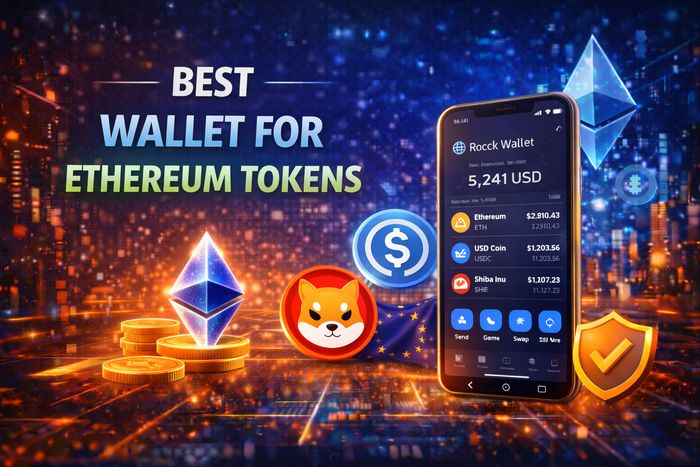
Best Wallet for Ethereum Tokens (2026): How to Choose a Safe ERC-20 Wallet
Looking for the best wallet for Ethereum tokens usually means you need a secure way to store and manage ETH and ERC-20 tokens (stablecoins, DeFi tokens, governance tokens, meme coins, and more). The “best” choice depends on how you use Ethereum:
- Long-term holding: you need maximum protection and low exposure to risky dApps.
- DeFi usage: you need strong approval controls, clear signing prompts, and a safe workflow.
- Trading: you want quick deposits/withdrawals and a clean path between exchange and self-custody.
This guide explains what features matter for ERC-20 wallets in 2026, how to avoid common Ethereum token traps (approval drains, fake tokens, wrong networks), and how to build a Vault & Spending setup that protects your funds without slowing you down.
Quick answer: what “best” means for ERC-20 wallets
The best wallet for Ethereum tokens is the one that lets you:
- Control your keys (self-custody) for long-term ownership.
- See what you sign (clear transaction + approval prompts).
- Manage networks safely (Ethereum mainnet + L2s) without confusion.
- Handle approvals (token allowances) with minimal risk.
If you trade often, a common workflow is: buy/sell on an exchange and withdraw to self-custody for storage. Many users do execution on platforms like BYBIT and then store ERC-20 tokens in a dedicated wallet. The key is: trading convenience should not replace a storage strategy.
Wallet types: custodial vs self-custody (and why it matters)
Custodial (exchange wallets)
Custodial means the platform holds the private keys. This is convenient for fast trading, but you rely on the platform’s controls and policies. For active trading balances it can make sense; for long-term holdings it increases custodial exposure.
Self-custody (non-custodial) wallets
Self-custody means you hold the seed phrase (recovery phrase). You own your keys and can move assets anytime. The trade-off is responsibility: you must protect the seed and avoid signing malicious approvals.
Best practice: keep a small “working balance” on platforms for trading and move long-term ERC-20 holdings into self-custody (ideally with a separate vault wallet).

Must-have features for Ethereum token wallets
Ethereum tokens bring specific requirements. A great ERC-20 wallet should include:
1) Strong token handling
- Easy viewing of ERC-20 token balances
- Ability to hide scam/airdrop dust tokens
- Manual token import (contract address) when needed
2) Clear approvals and transaction simulation (when available)
Approvals are where people lose money. A good wallet makes it hard to approve unlimited allowances by accident and shows what a signature actually does.
3) Network management (Mainnet + L2)
In 2026, most everyday Ethereum activity happens on L2s. Your wallet should make it obvious whether you’re on Ethereum mainnet or an L2 and reduce “wrong network” mistakes.
4) Security controls
- App lock + biometrics
- Secure backup flow (seed phrase displayed once, offline storage encouraged)
- Hardware wallet compatibility for a true vault setup
Ethereum L2s in 2026: why they matter for token wallets
Ethereum token users often interact with L2 networks to reduce fees. That’s helpful—but it creates new pitfalls:
- Same token, different chain: USDC on mainnet vs USDC on an L2 are not the same asset location.
- Wrong network deposits: sending to an exchange on an unsupported network can cause delays or loss.
- Bridging risk: bridges add complexity and contract risk.
Practical rule: always confirm the receiving platform’s supported networks before sending ERC-20 tokens. When in doubt, do a small test transfer first.
Gas fees: practical tips to pay less and avoid stuck transactions
1) Keep some ETH for gas
To move ERC-20 tokens on Ethereum mainnet or many L2s, you usually need the chain’s gas token (often ETH). A classic mistake is holding only tokens and having no gas to move them.
2) Use L2s for smaller transactions
If you frequently swap or interact with dApps, L2s can reduce fees. Just be strict about network selection and deposits/withdrawals.
3) Don’t panic-bump blindly
Stuck transaction? First check whether it’s pending due to low gas. Use proper replace/cancel flows rather than repeatedly resending.
DeFi safety: approvals, signatures, and scam filters
Most Ethereum token losses come from malicious approvals, not “wallet hacks.”
What is an approval (allowance)?
An approval allows a smart contract to spend your tokens. If you approve a malicious contract (or unlimited allowance) it can drain your wallet later, even without new confirmation.
DeFi safety rules for Ethereum tokens
- Use a dedicated spending wallet for DeFi.
- Avoid unlimited approvals unless you fully trust the contract.
- Verify domains; avoid “urgent claim” and “airdrop ending” pressure tactics.
- Treat surprise tokens as suspicious (dusting/scam tokens are common).
If you move funds between trading platforms and self-custody, keep the process simple and repeatable. Many users compare exchange choices like BITGET and MEXC for liquidity and markets, but your security habits remain the deciding factor.

Vault & Spending strategy for ETH + ERC-20 tokens
The best overall “Ethereum tokens wallet” setup is a two-wallet system:
1) Vault wallet (long-term storage)
- Holds your main ETH and core ERC-20 positions
- Rarely interacts with dApps
- Ideally protected by hardware wallet signing
2) Spending wallet (daily DeFi and swaps)
- Small balance used for swaps, minting, testing, and dApps
- Approvals kept minimal
- If compromised, losses are limited
Rule of thumb: never use your vault wallet to chase random airdrops or connect to unknown sites. Keep it boring.
Common mistakes with Ethereum tokens (and how to avoid them)
1) Holding tokens without ETH for gas
Always keep a small ETH buffer on each network you use, otherwise you may be unable to move assets.
2) Sending to the wrong network
Confirm network support on the receiving side. For new addresses or new networks, do a test transaction first.
3) Importing fake token contracts
Only import token contracts you’ve verified. Scam tokens can mimic names and logos.
4) Unlimited approvals everywhere
Unlimited allowances are convenient until they aren’t. Keep approvals limited, especially in spending wallets.
CTA: Set up an ERC-20 wallet the safe way
Use a Vault wallet for long-term ETH/ERC-20 holdings and a separate Spending wallet for DeFi. Keep seed phrases offline, verify networks, and always test transfers with small amounts first.
Use the ERC-20 Wallet ChecklistFAQ: Best Wallet for Ethereum Tokens
What is the best wallet for Ethereum tokens?
The best wallet is one that supports ERC-20 tokens, manages Ethereum mainnet and L2 networks clearly, and helps you control approvals. For most users, the best result is a Vault & Spending setup rather than a single wallet choice.
Do I need ETH to move ERC-20 tokens?
Yes. On Ethereum mainnet you need ETH for gas to send ERC-20 tokens or interact with contracts. On many L2s you still need the chain’s gas token (often ETH) to transact.
How do I avoid ERC-20 approval scams?
Use a dedicated spending wallet for DeFi, avoid unlimited allowances by default, verify dApp domains, and never approve rushed “claim” prompts from random links.
Why do my tokens not show up in my wallet?
Sometimes you need to add the token contract manually, or you may be on the wrong network (mainnet vs L2). Always verify the network and contract address before importing.
Is a hardware wallet better for Ethereum tokens?
For large holdings and long-term storage, hardware wallets offer stronger key isolation. Many users keep their vault on hardware and use a smaller Android spending wallet for DeFi activity.