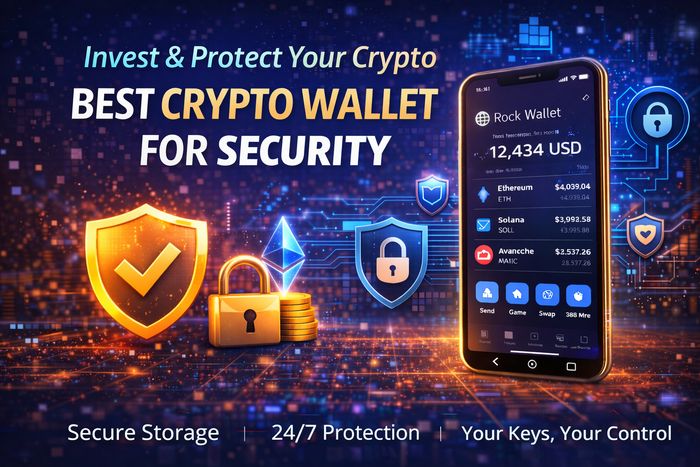
Best Crypto Wallet for Security (2026): A Deep, Practical Guide to Protecting Your Coins
If you’re searching for the best crypto wallet for security, you’re already thinking like a long-term survivor in crypto. Most losses don’t happen because “crypto is unsafe” — they happen because people use wallets incorrectly: they store seed phrases in cloud notes, sign malicious approvals, connect to fake dApps, or keep life-changing money in a daily-use wallet.
This guide focuses on security-first decision making: what “secure” actually means, how to build a safer wallet setup, and which wallets are commonly considered when users want a modern Web3 experience without ignoring risk. We’ll also highlight three popular ecosystems people frequently use today: BITGET, BYBIT, and MEXC.
Disclaimer: This content is for educational purposes only and does not constitute financial advice. Crypto involves risk, including total loss. Security is a process, not a product.
What “secure” really means in a crypto wallet
A secure wallet is not just a brand or an app. In crypto, security = key control + safe behavior + damage limitation. The best crypto wallet for security is the one that helps you:
- Protect private keys (so attackers can’t steal them)
- Avoid malicious transactions (so you don’t sign away your funds)
- Limit blast radius (so one mistake doesn’t wipe out everything)
- Recover safely (so you can restore funds if your phone is lost)
This is why the most secure approach is rarely “one wallet.” Instead, it’s a system: a vault for storage, a spending wallet for daily activity, and a high-risk wallet for experiments.
Quick picks: best wallets for security (by user type)
Best for Security + Everyday Web3 Use: BITGET Wallet
Strong for users who want a modern multi-chain wallet experience while maintaining practical security habits and separation of wallets.
Best for Hybrid Users (CEX + Web3) with Safer Flow: BYBIT Web3 Wallet
Useful if you move between exchange trading and on-chain actions and want a smoother, app-first workflow.
Best for Exchange-First Users Starting Web3 Carefully: MEXC Wallet
Practical if you prefer a familiar ecosystem and want to expand into Web3 features without jumping into complex setups immediately.
Threat model: what you’re actually defending against
To choose the best crypto wallet for security, you should know your real risks. Most users face these threats:
1) Phishing and fake websites
Attackers clone popular wallet and dApp pages and trick users into entering seed phrases or connecting wallets to malicious contracts. On mobile, this can be worse because URLs are harder to inspect.
2) Malicious approvals (token allowances)
Many DeFi hacks are really “user permission” problems. If you approve a malicious spender (or an exploited protocol), it can drain tokens from your wallet without asking again.
3) Dangerous signatures (not just approvals)
Some signatures don’t move funds immediately but give attackers permission to act later. Users often sign because the pop-up looks routine.
4) Device compromise and social engineering
If your device is compromised (malware, stolen phone with weak passcode), or if someone convinces you to reveal backups, your security collapses quickly. The wallet is only one layer of defense.
5) Bridge risk and cross-chain loss
Bridges are complex, and mistakes are common: wrong network, wrong token standard, or unsafe routing. Even good users make costly errors when moving quickly.
The safest wallet setup (step-by-step)
If you do one thing from this article, do this: build a wallet system that contains damage. Here is a proven, security-first setup:
Step 1: Create a 3-wallet structure
- Vault wallet: long-term storage, never connects to dApps, rarely sends transactions
- Hot wallet: daily spending, swaps, moderate DeFi, limited balance
- Explorer wallet: experimental dApps, airdrops, new protocols, strict small balance
Step 2: Lock down your device and wallet
- Use a strong phone passcode and biometrics
- Enable app lock inside the wallet
- Disable risky cloud backups for sensitive content
- Keep your OS updated
Step 3: Backup correctly (offline, redundant, private)
- Write down your backup phrase offline (paper/metal) and store it in a secure place
- Never screenshot your seed phrase
- Never store the seed phrase in Notes, email drafts, or cloud drives
- Consider redundancy: two secure physical locations (only if it doesn’t increase exposure)
Step 4: Set spending rules (this prevents “one mistake = ruin”)
- Vault wallet: move funds only to known addresses you control
- Hot wallet: keep a weekly/monthly limit (your DeFi/trading budget)
- Explorer wallet: keep the smallest balance possible
BITGET Wallet: security overview for Web3 users
For many users, “security” doesn’t mean hiding from Web3—it means using Web3 with better boundaries. BITGET Wallet fits well when you want a modern multi-chain experience while still following strong operational discipline: keep your vault separate, use a hot wallet for activity, and isolate experimental interactions.
Security strengths (when used correctly)
- Practical multi-chain management: helps reduce mistakes caused by juggling multiple wallets
- Web3-ready tooling: useful for swaps and DeFi access while maintaining wallet separation
- Mobile-friendly security habits: works well with app lock, biometrics, and “spending wallet” design
How to use it as a “secure system”
- Use BITGET Wallet as your hot wallet (daily DeFi + swaps), not your long-term vault
- Keep only a limited balance inside it
- Use a dedicated explorer address for new dApps
- Monthly: review approvals and revoke what you don’t use

BYBIT Web3 Wallet: security overview for hybrid CEX + on-chain users
If you frequently trade on an exchange and also use DeFi, your biggest security challenge is speed: fast markets encourage fast clicks. BYBIT Web3 Wallet can make workflows more streamlined, which helps reduce user-error friction—provided you still follow safety rules (separation, approvals, and phishing discipline).
Why it can be a “safer flow” for some users
- Hybrid workflow: reduces the constant moving between unrelated apps and random web pages
- Mobile-first execution: helpful for users who need quick action but want fewer mistakes
- Good fit for rule-based spending: treat it as an active hot wallet with strict limits
Security tip for BYBIT-style usage
Create a rule: your Web3 wallet is a budget wallet. Keep most funds in your vault address and move only what you need for the next few trades or DeFi actions. This drastically reduces worst-case outcomes.
MEXC Wallet: security overview for exchange-first users
A common security failure is jumping into advanced DeFi before you understand basic wallet behavior. MEXC Wallet can make the transition easier for exchange-first users because it supports a more familiar, guided approach. If “secure” for you means “less confusion and fewer mistakes,” then clarity and structure matter.
Where it fits in a security-first strategy
- Beginner-friendly progression: start with basic transfers, then swaps, then simple DeFi
- Wallet separation: easy to use as a dedicated hot wallet while keeping a vault elsewhere
- Practical for learning: helps users build safe habits before taking bigger on-chain risks

DeFi safety: approvals, signatures, and scam prevention
If you use DeFi, wallet security becomes permission security. Here are the rules that prevent most disasters:
Rule 1: Don’t approve unlimited amounts unless you must
Unlimited approvals are convenient, but they increase your exposure. Prefer limited approvals, especially for tokens you hold in size (stablecoins, ETH, major holdings).
Rule 2: Treat every “sign message” prompt as risky
Signing is not always harmless. If you don’t understand what you’re signing, don’t sign. When in doubt: disconnect, verify the domain, and try again from a trusted bookmark.
Rule 3: Use separate wallets for separate risk levels
This is the biggest security upgrade most users can do. Even if you slip once in an explorer wallet, your vault wallet stays untouched.
Rule 4: Split large transactions
When bridging or swapping large amounts, consider splitting into smaller transactions. It reduces both operational risk (mistakes) and market risk (slippage).
Cold vs hot wallets: what to use for what
When people ask for the best crypto wallet for security, the true answer is usually: use the right tool for the right job.
Hot wallet (mobile / browser)
- Best for: daily spending, swaps, routine DeFi
- Risk: exposed to approvals, phishing, and frequent transactions
- Rule: keep a limited balance
Cold wallet (hardware / offline signing)
- Best for: long-term storage, large balances, infrequent transfers
- Risk: setup mistakes and poor backup storage
- Rule: never connect to random dApps; keep backups offline and secure
Many advanced users keep 80–95% of funds in cold storage and use hot wallets as “spending accounts.” You don’t need to be advanced to copy this strategy—you just need discipline.
Security checklist (copy/paste)
- Wallet separation: vault + hot + explorer
- Seed phrase: offline only, never screenshots, never cloud notes
- Device lock: strong passcode + biometrics
- App lock: enable wallet passcode/Face ID
- Phishing defense: use bookmarks, verify domains, avoid random links
- Approvals: avoid unlimited allowances; revoke unused permissions monthly
- Bridging: double-check chain + token + address; consider split transfers
- DeFi budget: keep only what you can afford in the hot wallet
FAQ
What is the best crypto wallet for security?
The best crypto wallet for security is the one used inside a secure system: a vault wallet for storage, a hot wallet for daily activity, and an explorer wallet for experiments. For modern Web3 use, BITGET Wallet can be strong as a daily hot wallet, BYBIT Web3 Wallet can fit hybrid exchange + on-chain users, and MEXC Wallet can be practical for exchange-first users entering Web3.
Is a mobile crypto wallet safe for large amounts?
A mobile wallet can be safe for daily spending, but it’s generally not ideal for life-changing sums because it’s used frequently and exposed to more risk. For large holdings, use a vault wallet strategy and consider cold storage for maximum protection.
What is the biggest security risk in DeFi?
The biggest risk is signing malicious approvals or messages. Many “hacks” are actually permission misuse. Keep strict wallet separation and revoke permissions you don’t use.
How often should I revoke token approvals?
A good routine is monthly, or immediately after using unknown or experimental dApps. If you farm aggressively, review approvals more frequently.
Can I be secure without a hardware wallet?
Yes, you can improve security dramatically without hardware by using wallet separation, offline backups, strict DeFi budgeting, and phishing discipline. Hardware security adds another strong layer for large holdings.
Conclusion: The best crypto wallet for security is not a single app—it’s a secure routine. Use a vault for storage, a hot wallet for daily activity, and an explorer wallet for experiments. Then choose the ecosystem that fits your workflow: BITGET for all-in-one Web3 usage, BYBIT for hybrid trading + Web3 flow, and MEXC for exchange-first users expanding into Web3.