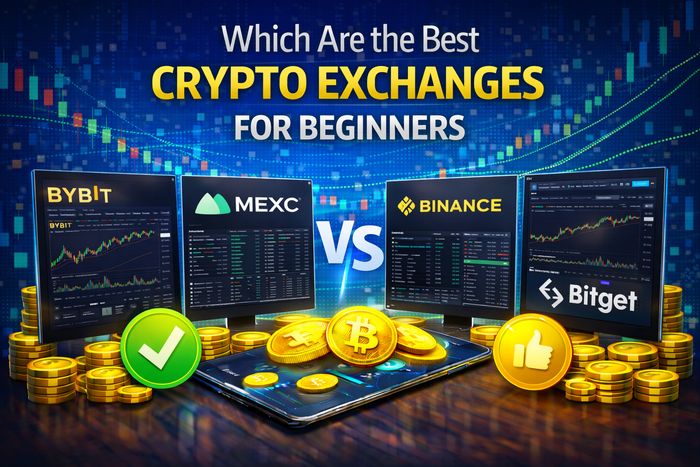
Which Are the Best Crypto Exchanges for Beginners? (2026 Guide)
If you’re new to crypto, the “best exchange” is the one that helps you buy, sell, and store assets safely without confusing interfaces or hidden costs. Beginners typically need: simple onboarding, clear fees, good security, and a platform that won’t push you into high-risk products too early.
This guide explains what makes a crypto exchange beginner-friendly, how to compare platforms with a simple checklist, and how to set up your account and first trades in a safe, step-by-step way. (Educational content only — not financial advice.)
Quick answer: what “best for beginners” really means
The best crypto exchanges for beginners usually share the same DNA:
- Easy deposits (bank transfer/card where supported) and clear withdrawal steps
- Simple UI modes (beginner mode + advanced mode when you’re ready)
- Strong security controls (2FA, withdrawal allowlist, device/session management)
- Transparent fees (trading fees, spreads, deposit/withdraw fees)
- Educational resources (learn section, tutorials, demo/earn programs)
- Reliable support (help center + responsive ticket system)
Most beginners do best starting with a platform that makes spot trading and simple buys easy, while keeping leverage and complex derivatives “out of the way” until you’ve learned risk management.
Beginner exchange checklist (use this before you sign up)
Use this checklist like a scoring system. If an exchange fails any of the “must-have” items, it’s not beginner-friendly (even if it’s popular).
Must-have #1: Clear “simple buy” and spot trading
- Can you buy BTC/ETH with an easy flow?
- Is spot trading available with limit orders?
- Can you switch between beginner and advanced views?
Must-have #2: Transparent fees (not just “low fees” marketing)
- Are trading fees easy to find and understand?
- Is there a visible spread/quote difference on instant buys?
- Are withdrawal fees and minimums clearly shown?
Must-have #3: Strong security controls
- 2FA (authenticator app) support
- Withdrawal whitelist / address allowlist
- Login alerts and device/session management
- Anti-phishing protections (where available)
Must-have #4: Beginner-friendly learning and support
- Learn center, tutorials, or onboarding guides
- Clear help center articles
- Support that can actually resolve account issues
Beginner rule that saves money
Start with spot, use limit orders when possible, and avoid leverage until you can explain liquidation in one sentence.
Top beginner-friendly features to look for
1) “Beginner mode” + “Pro mode” in the same app
A beginner-friendly exchange should let you start with a simple interface, then smoothly upgrade to advanced tools (limit orders, charting, order history) without forcing you to switch platforms.
2) Simple funding options
Beginners should prioritize exchanges with convenient deposits (bank transfer/card where available), and clear guidance for withdrawals. Confusing funding is where many first-time users lose money via unnecessary conversion steps.
3) Good asset coverage (but not “everything”)
Beginners don’t need 2,000 coins. A strong beginner exchange should offer the majors, a handful of quality alts, and stablecoins—plus clear risk warnings for high-volatility tokens.
4) Safer defaults
Great beginner exchanges make it hard to accidentally do dangerous things: they clearly label margin/futures, highlight risks, and provide simple position controls.

Fees beginners must understand (and how to avoid overpaying)
Most beginner losses aren’t from trading— they’re from accidentally paying too much in spreads and fees. These are the key fee types to understand:
1) Trading fees (maker/taker)
Spot exchanges often charge maker/taker fees. If you use limit orders, you may pay less than using market orders. Even small fee differences matter over time.
2) Spreads (the invisible fee on instant buys)
“Buy crypto instantly” is convenient, but the quoted price can include a spread. If your goal is to save money, compare instant buy pricing vs spot limit orders.
3) Deposit and withdrawal fees
Some platforms are cheap to trade on but expensive to withdraw from. Also watch network fees and choose networks carefully when withdrawing stablecoins or tokens.
4) Conversion fees
If the platform converts fiat to crypto (or crypto to crypto), check whether there’s an explicit conversion fee or an unfavorable rate embedded in the quote.
Beginner tip: If you buy regularly, use a simple DCA schedule with limit orders on liquid pairs. It’s usually cheaper and calmer than chasing pumps.
Security setup for beginners (non-negotiables)
Beginners should treat exchange security like online banking—maybe stricter. Use this baseline setup:
1) Turn on 2FA (authenticator app)
This is the single biggest security improvement you can make. Avoid SMS 2FA when possible.
2) Enable withdrawal allowlist
Whitelisting means withdrawals can only go to pre-approved addresses—this blocks many common account-takeover theft attempts.
3) Use anti-phishing and login alerts
Alerts help you catch unauthorized access quickly. Anti-phishing codes help you identify official emails.
4) Keep only a “trading balance” on the exchange
Beginners should not store their entire portfolio on an exchange. Keep what you need for near-term trading, and consider self-custody for long-term holdings once you’re comfortable.
Internal reads: 2FA · hardware wallet · self-custody · exchange hacks
First 7 steps: your safest onboarding plan
- Choose one exchange with good security and clear fees (don’t open five accounts at once).
- Complete verification (KYC) if required for your region and intended limits.
- Secure the account: 2FA + withdrawal allowlist + login alerts.
- Start with a small deposit to test the flow (deposit → buy → sell → withdraw).
- Buy only a major asset first (BTC/ETH) or a stablecoin for learning.
- Learn limit orders: place a small limit order and observe how fills work.
- Set rules: no leverage, no “revenge trading,” and only trade what you understand.
One CTA (single CTA only)
If you want a beginner-friendly onboarding flow with clear next steps, start with one platform, secure it properly, and test with a small amount first.
Common beginner mistakes (and how to avoid them)
- Using market orders on illiquid coins → leads to bad fills and instant regret.
- Chasing pumps → buy high, panic sell low. Use a plan and size small.
- Ignoring fees/spreads → “I’m profitable” turns into “why is my balance shrinking?”
- Trying leverage too early → liquidation is the fastest teacher (and it’s expensive).
- No security setup → not enabling 2FA/allowlist is unnecessary risk.
- Mixing investing and trading funds → creates emotional trading and poor decisions.
Other beginner exchange options (for comparison)
If your first-choice platform isn’t available in your country, or you want to compare onboarding styles, many beginners also look at large, well-known global exchanges and regulated on-ramps in their region. The best approach is to compare: availability, fees, security controls, and ease of use.
Preferred ecosystems many users shortlist: Bybit, Bitget, and MEXC. (Only one of these is linked above as requested; banners appear separately.)
FAQ: Best crypto exchanges for beginners
Which are the best crypto exchanges for beginners?
The best beginner exchanges are easy to use, have transparent fees, strong security controls (2FA, allowlists), and make spot trading and simple buys straightforward. Beginners should prioritize safety and clarity over leverage products.
What is the safest way to start buying crypto?
Start with a small test deposit, enable 2FA and withdrawal allowlists, buy a major asset (BTC/ETH) or stablecoin, and learn limit orders. Avoid leverage until you understand liquidation mechanics.
Do beginners pay more fees than experienced traders?
Often yes—mainly through spreads on instant buys and using market orders on less liquid pairs. Learning limit orders and checking spreads reduces unnecessary costs.
Is it better to use a wallet or leave crypto on an exchange?
For beginners, it’s common to start on an exchange. Over time, many users move long-term holdings to self-custody. A simple rule: keep only what you need for short-term trading on an exchange.
Should beginners trade futures or margin?
Usually no. Futures and margin add liquidation risk and complexity. Most beginners are better served learning spot trading first, building a plan, and practicing risk management.
What should I look for in a beginner crypto app?
Beginner mode + pro mode, clear fees, easy deposits/withdrawals, strong security options, and an easy-to-read portfolio view.