Updated: September 12, 2025
KYC Crypto Exchange: What It Is, Why It Matters, and How to Pass Verification Fast
If you plan to trade on a centralized exchange, you’ll encounter KYC (Know Your Customer) checks. This guide explains how KYC works on a KYC crypto exchange, the documents you need, typical verification levels and limits, privacy considerations, and practical steps to get approved smoothly—plus comparisons of leading platforms like BYBIT, BITGET, and MEXC.
What Is KYC on a Crypto Exchange?
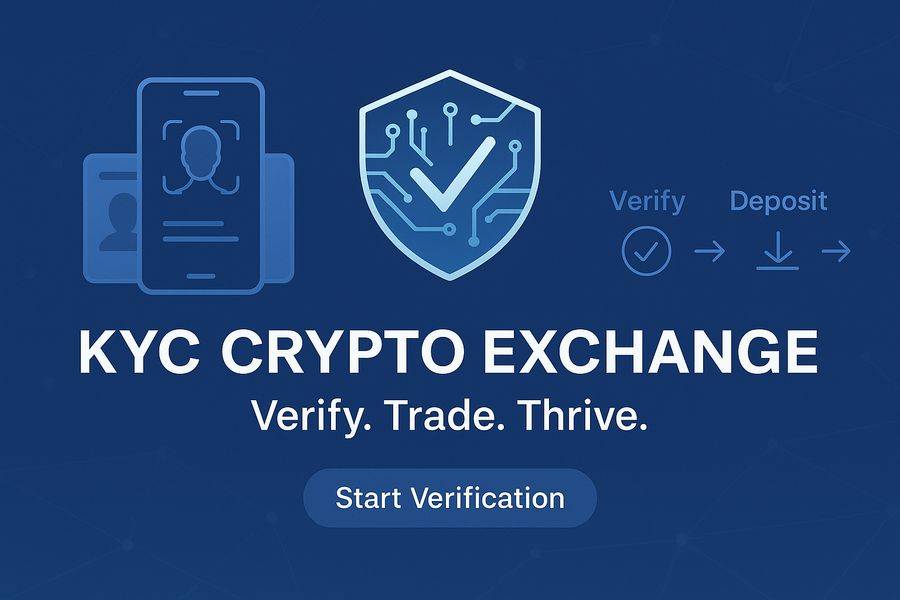
KYC is the process through which a centralized exchange verifies a customer’s identity to comply with anti-money laundering (AML) and counter-terrorist financing (CTF) obligations. On a KYC crypto exchange, you typically submit government-issued ID, a selfie (liveness check), and a proof of address. Some platforms also ask about employment, source of funds, and trading purpose.
KYC does not guarantee safety or profitability—it reduces illicit use and helps platforms meet legal obligations. Your personal security still depends on strong account protections like 2FA, withdrawal whitelists, and hardware key support.
Why Exchanges Require KYC
- Regulatory compliance: Exchanges must identify users to meet AML/CTF and sanctions screening requirements.
- Fraud prevention: Identity checks deter account takeovers, chargebacks, and bonus abuse.
- Account recovery: Verified identity can simplify restoring access if you lose credentials.
- Higher limits & features: Completing KYC often unlocks higher withdrawal limits, fiat on-ramps/off-ramps, and certain derivatives access.
KYC Levels, Limits & Perks
Most KYC crypto exchanges use tiered verification. Names differ by platform, but the structure is similar:
| Level | What You Provide | Typical Access |
|---|---|---|
| Basic | Email/phone + name; sometimes country confirmation | Limited trading; low deposit/withdrawal limits; may block fiat |
| Standard | Government ID + selfie (liveness) | Increased limits; most spot and derivative features |
| Advanced | Proof of address; possible source-of-funds questionnaire | Highest limits; fiat rails; additional products |
| Institutional | Business documents; UBO info; enhanced due diligence | Custom limits; account managers; APIs & reporting |
How to Pass KYC Quickly (Step-by-Step)
- Use matching details: Ensure your account name matches your ID exactly (middle names, accents, order).
- Prepare clear documents: Valid, unexpired passport or national ID; capture full corners; avoid glare.
- Proof of address: Bank statement or utility bill (recent, typically <3 months) showing your full name and address.
- Liveness/selfie check: Follow lighting instructions; remove hats/glasses; keep the camera steady.
- Enable security: Turn on 2FA before submitting; add withdrawal whitelists once verified.
- Use the right device: If the web check fails, try the exchange’s mobile app for better camera capture.
Common Rejection Reasons & Fixes
- Blurry or cropped ID: Retake the photo; include all edges; try natural light.
- Mismatched information: Check spelling and order of names; update your profile before resubmitting.
- Outdated proofs: Provide a recent address document; ensure full name and date are visible.
- VPN/geo conflicts: Some platforms restrict regions; turn off VPN during verification.
- Unsupported documents: Use the document types explicitly allowed by the platform.
Data Privacy & Security
A reputable KYC crypto exchange uses encryption in transit and at rest, segregated storage, access controls, and vendor audits. As a user, you can reduce exposure by:
- Submitting only what is required; redact irrelevant fields if the platform allows.
- Using strong, unique passwords plus app-based 2FA or a hardware key.
- Enabling withdrawal address whitelists and anti-phishing codes.
- Regularly exporting statements for your own secure records.
Never share your codes, seed phrases, or support chat screenshots publicly. Exchange staff will not ask for passwords or full 2FA backup codes.
Regional Considerations & Compliance
Requirements vary by country and product type (spot vs. derivatives). Some regions impose stricter ID, proof-of-address, or source-of-funds checks. Always review a platform’s eligibility page and terms for your jurisdiction before onboarding.
No-KYC vs KYC Exchanges: Pros & Cons
| No-KYC | KYC | |
|---|---|---|
| Privacy | Higher privacy; limited features or lower limits on many platforms | Identity is verified; data handled per platform policies |
| Limits & Products | Often capped; fewer fiat options | Higher limits; fiat rails; derivatives availability |
| Compliance | Restricted in many regions | Aligned with AML/CTF expectations |
| Account Recovery | Harder to prove ownership | Easier due to verified identity |
Platform Overview: BYBIT vs BITGET vs MEXC
While exact KYC tiers and limits can change, here’s a high-level view of three popular, global platforms. Visit each to see the latest details and current promotions.
| Platform | KYC Experience | What Stands Out | Get Started |
|---|---|---|---|
| BYBIT | Streamlined app flow with liveness checks; tiered limits | Rich product suite (spot, perps, options), robust security controls | BYBIT — Regisztrálj kedvezménnyel |
| BITGET | Clear tier progression; address proofs for higher limits | Large copy-trading ecosystem; frequent promos | BITGET — Bonus |
| MEXC | Fast verification for most regions | Broad spot/alt coverage with competitive fees | MEXC — Promo |
Best Practices & KYC Checklist
Before You Start
- Have your valid ID and proof of address ready (PDF/JPG allowed; check platform guidance).
- Use your legal name exactly as printed; avoid nicknames.
- Disable VPN during the check to prevent location mismatches.
During Submission
- Use a high-resolution camera with even lighting; avoid flash glare.
- Follow on-screen prompts for the liveness/selfie sequence.
- Upload uncropped, legible documents; show full edges and MRZ/barcodes.
After Approval
- Enable app-based 2FA or a hardware key immediately.
- Set up withdrawal whitelists and anti-phishing codes.
- Periodically review your verification status; some platforms require renewals if documents expire.
FAQ
Do I have to complete KYC to trade crypto?
On most centralized exchanges, yes—especially for fiat on-ramps/off-ramps and higher limits. Some features may work without KYC, but access is limited.
What documents are usually accepted?
Government-issued passport or national ID, plus a proof of address such as a bank statement or utility bill issued within the last few months.
How long does KYC take?
Automated checks can finish in minutes; manual reviews may take longer depending on volume and clarity of documents.
Is my personal data safe?
Reputable exchanges apply encryption and access controls. Always enable 2FA, use strong passwords, and beware of phishing. Review each platform’s privacy policy.
Can I trade derivatives without KYC?
In many regions, derivatives access requires full KYC and additional eligibility confirmations. Check the platform’s rules for your jurisdiction.
What if my KYC is rejected?
Correct blurry/cropped images, provide supported document types, and ensure names/addresses match exactly. If needed, contact support with additional proofs.
Glossary
- KYC (Know Your Customer): Identity verification to assess customer risk.
- AML (Anti-Money Laundering): Controls to prevent illicit finance.
- CTF: Counter-terrorist financing measures.
- EDD: Enhanced due diligence for higher-risk profiles.
- PEP/Sanctions Screening: Checks against politically exposed persons and sanctioned lists.
- Liveness: Biometric test ensuring a real person is present.